
Projects · Erasmus+
Erasmus+ projects
Since 2014 Callidus has taken part in 26 Erasmus+ projects in vocational and adult education, two of them as coordinator.
- PROJECTS
- 26
- AS COORDINATOR
- 2
- ONGOING
- 2
- PERIOD
- 2014 – 2028
- TOTAL VALUE
- €6.46M
Overview
26 projects, newest first
Project 01 · 2026 – 2028ONGOING
Full STEM Ahead: Building adults' science literacy through place-based education
- PROJECT COORDINATOR
- iserundschmidt GmbHSandkaule 15, 53111 Bonn, Germany (DE)
- PROJECT NUMBER
- 2026-1-DE02-KA220-ADU-000450589
- TOTAL VALUE
- EUR 250,000
- DURATION
- 1 September 2026 – 31 August 2028
PROJECT GOAL
Full STEM Ahead aims to raise the science literacy of adult learners by equipping adult educators with innovative place-based education (PBE) strategies. The project seeks to remove barriers to adult participation in STEM and to make science more accessible, engaging and connected to everyday life. Through a comprehensive professional development programme, a PBE Toolkit and Science Learning Festivals, the project will build critical thinking, problem-solving skills and lifelong science literacy among diverse groups of adult learners.
Science literacy is recognised as one of the six foundational skills needed for informed decision-making, employability and civic participation. Yet many adults remain disconnected from science education, because of earlier negative experiences, inaccessible content or the impression that science is too complex or irrelevant to their lives. Although the PBE approach is used successfully in primary and secondary education, its potential in adult education remains largely untapped.
Activities07
The Full STEM Ahead partners will carry out the following activities:
- 01Validating the needs and skills of adult educators as a basis for developing the programme
- 02Developing a 30-hour continuing professional development (CPD) programme with clearly defined learning outcomes for each module, a digital micro-credential and a Europass certificate
- 03Producing a PBE Toolkit with 24 innovative resources: digital escape rooms, citizen science projects, problem-based learning challenges and science round tables
- 04Piloting the programme and the Toolkit with adult educators and adult learners in all partner countries
- 05Producing a Festival Organisers' Handbook and organising 6 Science Learning Festivals in Germany, Ireland, Portugal, Cyprus, Spain and Croatia
- 06A transnational training event for adult educators, hosted by Callidus in Zagreb in February 2028
- 07Dissemination activities aimed at policy makers, adult education providers, and vocational and local education organisations
Impact05
The project will deliver the following concrete results:
- 01The 30-hour Full STEM Ahead professional development programme for adult educators, with opportunities for transnational mobility and exchange; 72 adult educators will be trained and supported
- 02A PBE Toolkit with 24 innovative science-based resources
- 03A Festival Organisers' Handbook, and the programming and delivery of 6 Science Learning Festivals for more than 300 adult learners
- 04All project results will be available as open educational resources (OER) on the project's online platform
- 05A comprehensive dissemination strategy that ensures local, regional and EU impact of the project results
Partners06
- 01Callidus – adult education institution (HR)
- 02iserundschmidt GmbH (DE)
- 03DMZ Digital Media Zone Company Limited by Guarantee (IE)
- 04IN-ECOS Cooperativa para a Inovação do Território e Ecossistemas, CRL (PT)
- 05ENOROS Consulting Limited (CY)
- 06Esciencia Eventos Científicos SL (ES)
Funded by the European Union. Views and opinions expressed are however those of the author(s) only and do not necessarily reflect those of the European Union or the European Education and Culture Executive Agency (EACEA). Neither the European Union nor EACEA can be held responsible for them. 2026-1-DE02-KA220-ADU-000450589
Project 02 · 2025 – 2027ONGOING
Net Zero Heroes – Advancing the role of Women in Green Tech Sectors
- PROJECT COORDINATOR
- Fundación AyesaAvd. Marie Curie 2, PCT Cartuja, 41092 Sevilla, Spain (ES)
- PROJECT NUMBER
- 2025-1-ES01-KA220-VET-000356026
- TOTAL VALUE
- EUR 250,000
- DURATION
- 1 October 2025 – 30 September 2027
PROJECT GOAL
Net Zero Heroes aims to increase women's interest in vocational education and training in green technologies and to empower them to take a more active part in the green tech and net-zero sectors. The project promotes greater visibility of women in these fields through awareness-raising campaigns, the presentation of female role models and mentoring activities that help girls and women choose their educational and career path. At the same time, the project develops specialised learning content for teachers, trainers and career counsellors, so that they better understand employment opportunities in green occupations and can guide women towards these sectors more effectively.
Activities06
The Net Zero Heroes partners will carry out the following activities:
- 01A needs assessment and an analysis of the barriers women face when entering education and work in green technologies
- 02Campaigns and communication activities to increase women's interest in vocational education and training in green tech
- 03Collecting and presenting inspiring women's stories and examples of good practice from net-zero and green industries
- 04Developing a mentoring programme and tools to support girls and women in the transition from education to employment
- 05Designing and delivering a professional development programme for teachers, trainers and career counsellors
- 06Events and dissemination activities to promote the project results and raise awareness of the importance of inclusion in the green transition
Impact06
The project will deliver the following concrete results:
- 01New tools and resources that encourage greater participation of women in vocational education and training related to green technologies
- 02A professional development programme for teachers, trainers and career counsellors on green tech careers and gender inclusion
- 03A collection of female role models and inspiring career stories from the green tech and net-zero sectors
- 04A mentoring programme supporting women in education, career guidance and entry to the labour market
- 05Stronger capacity of project partners and relevant stakeholders to promote gender equality and inclusion in green occupations
- 06A contribution to greater representation of women in green sectors and a more inclusive green transition in Europe
Partners07
- 01Callidus – adult education institution (HR)
- 02Fundación Ayesa (ES)
- 03Jen Janus Education Company Limited by Guarantee (IE)
- 04Women Elevation Malta – WEM (MT)
- 05Servin (IT)
- 06Skills Elevation FHB (DE)
- 07Berufsförderungsinstitut Burgenland – BFI Burgenland (AT)
Project 03 · 2024 – 2026
Bots4Business – Supporting vocational education and training to harness the benefits of artificial intelligence for the growth and prosperity of SMEs
- PROJECT COORDINATOR
- Berufsförderungsinstitut BurgenlandGrazerstraße 86, 7400 Oberwart, Burgenland, Austria (AT)
- PROJECT NUMBER
- 2024-1-AT01-KA220-VET-000245796
- TOTAL VALUE
- EUR 250,000
- DURATION
- 1 October 2024 – 30 September 2026
PROJECT GOAL
Bots4Business aims to upskill vocational education and training professionals through a participatory approach with small and medium-sized enterprises, in order to reshape work processes and offer training on relevant and applicable artificial intelligence models. B4B will present a range of differentiated approaches to the transition to artificial intelligence through sectoral business models that help inform SMEs on how best to shape the internal transfer of AI knowledge. We will create a robust, fit-for-purpose CPD intervention for vocational education and training on AI adoption, designed for SMEs.
Activities05
The Bots4Business partners will undertake the following activities:
- 01A needs assessment and validation process to inform the B4B curriculum framework
- 02Content development to design a training package for SMEs, including a MOOC on workforce skills
- 03Training and implementation activities at national and EU level
- 04Events and campaigns to promote the results of the B4B project
- 05Policy-shaping measures based on the evidence and experience gathered through the B4B project
Impact05
The project will deliver the following concrete results:
- 01A new training package for SMEs that meets the needs of European SMEs and their employees
- 02A professional development programme for vocational education and training professionals
- 03A collection of business cases and transition pathways for SMEs
- 04A policy paper mapping the experience of SMEs, to contribute to the policy debate on artificial intelligence at national and EU level
- 05Training for 66 vocational education and training professionals and outreach to 200 companies across Europe
Partners05
- 01Callidus – adult education institution (HR)
- 02Infinitivity Design Labs (FR)
- 03Academia Postal 3 Vigo S.L. (ES)
- 04CONFIMI Industria Basilicata – Associazione dell’Industria Manifatturiera e dell’impresa privata di Basilicata (IT)
- 05FUTURE IN PERSPECTIVE LIMITED (IE)
Project 04 · 2024 – 2026
Rural Impact – Harnessing the potential of youth social entrepreneurship for rural economies
- PROJECT COORDINATOR
- Valmieras Attīstības aģentūraCēsu Street 4, LV-4201 Valmiera, Vidzeme, Latvia (LV)
- PROJECT NUMBER
- 2024-1-LV01-KA220-VET-000254680
- TOTAL VALUE
- EUR 250,000
- DURATION
- 1 September 2024 – 31 August 2026
- PROJECT WEBSITE
- trainingclub.io/rural-impact
PROJECT GOAL
Through the Rural Impact project, our aim is to give young vocational education and training learners in rural areas access to targeted, high-quality VET programmes that help them build the skills to become successful social entrepreneurs. Through the business incubation projects planned in WP4, we also aim to support these young social entrepreneurs and provide the important business development support that is often missing in rural areas. We also aim to support VET providers in adapting their offer to rural areas.
Activities04
The following will be implemented:
- 01Online social entrepreneurship modules for 25 young VET learners (aged 18 to 35) living in rural areas
- 02Upskilling modules for 7 VET professionals in each partner country, to help them adapt their VET offer to rural areas
- 03A transnational pilot with 12 VET professionals, 2 from each partner country
- 04Social enterprise incubator projects with 5 VET learners in each country
Impact03
The following results will be developed:
- 01No. 1 – Social entrepreneurship e-modules for young entrepreneurs in rural areas: 10 e-modules of 60 to 90 minutes each, covering the key topics for building the social entrepreneurship skills of VET learners
- 02No. 2 – Upskilling for VET professionals so that they can deliver the social entrepreneurship training programme to VET learners in rural areas
- 03No. 3 – Rural Impact incubators providing a tangible link with the young entrepreneurs who complete the online modules
Partners05
- 01WeLearn Limited (IE)
- 02E.C.S.H. – Associação (PT)
- 03Callidus – adult education institution (HR)
- 04Bexley C-Level IT (RO)
- 05Acta Foundation (BG)
Funded by the European Union. Views and opinions expressed are however those of the author(s) only and do not necessarily reflect those of the European Union or the European Education and Culture Executive Agency (EACEA). Neither the European Union nor EACEA can be held responsible for them. 2024-1-LV01-KA220-VET-000254680
Project 05 · 2023 – 2025
GREEN SHOOTS: Green Skills for VET learning

- PROJECT COORDINATOR
- Servicio Español para la Internacionalización de la Educación, Spain
- TOTAL VALUE
- EUR 250,000
- DURATION
- 1 October 2023 – 30 September 2025
- PROJECT WEBSITE
- greenshootsprojects.com
PROJECT GOAL
The project will support the development of new knowledge and pedagogical approaches for vocational teachers and trainers on the theme of the green economy, including the innovative use of digital content. Using the EU Green Deal and the GreenComp framework, the project will focus on building teachers' pedagogical competences in developing technical, green and soft skills through immersive digital resources. For VET learners, the proposed dual model will achieve positive results in building their future careers.
Main activities and results03
- 01A professional development programme for vocational teachers and trainers
- 02Competence profiles
- 03A learning platform
Target group03
The primary target group:
- 01VET professionals, vocational teachers, in-company trainers, lecturers and consultants directly involved in delivering vocational training in the partner countries
- 02Experts from industry and companies in the green sector
Secondary target groups:
- 01VET teachers and other relevant educational institutions, vocational initiatives, SME associations, multinational consultancies, research institutes and green skills trainers
Partners06
- 01Future in Perspective Limited, Ireland
- 02Callidus – adult education institution, Croatia
- 03Exeo Lab Srl, Italy
- 04CARDET, Cyprus
- 05Skills Elevation FHB, Germany
- 06Infinitivity Design Labs, France
Project 06 · 2023 – 2025
LOTUS: Resilience in VET Education
- PROJECT COORDINATOR
- Future in Perspective Limited, Ireland
- TOTAL VALUE
- EUR 250,000
- DURATION
- 1 February 2023 – 1 February 2025
- PROJECT WEBSITE
- project-lotus.eu
PROJECT GOAL
The LOTUS project will support the development of digital pedagogy and expertise in the use of digital tools for vocational teachers, including the creation and innovative use of digital education content. Using the DigCompEdu framework, the partners will focus on building teachers' pedagogical competences in teaching and learning and in digital resources.
The project aims to increase the capacity and readiness of VET teachers to manage an effective shift towards digital education. The project's approach adopts the purposeful use of digital technologies in vocational education and training, alongside the development of digital pedagogy and expertise in the use of digital tools for teachers through the active creation of digital education content.
Main activities and results
The LOTUS project proposes a new approach to developing career management skills among VET learners, modernising career guidance so that it reflects the reality of the European labour market after the Covid-19 pandemic. The ability to design and plan a career progression path will be one of the key determinants of success for young VET learners in Europe, and the LOTUS project will provide a toolkit of interactive vocational resources for developing key career management skills. Stress management, critical thinking, problem solving and perseverance are among the skills VET learners will need to cope with the consequences of the pandemic and other disruptions to come, and to be ready for the future labour market. To help adult education teachers who have already faced many challenges during the pandemic, we will focus on motivation, positivity and change management. For this reason the LOTUS project will also develop tailored MOOC platforms that build the resilience of teachers and learners.
Target group06
The primary target group:
- 01Vocational teachers, trainers and educators, career counsellors and coordinators working directly in the delivery of vocational education and training in the partner countries
- 02Young VET learners, learners completing upper secondary education and starting new vocational careers, young jobseekers and young people in precarious jobs looking for new career opportunities
The project is aimed at young people of working age and will include those who face challenges in accessing vocational training and young people with fewer financial opportunities.
Secondary target groups:
- 01Employees and trainers working in the partner organisations
- 02Employees, trainers, consultants and advisers working for associated partners in each partner country
- 03VET institutions and other relevant educational institutions, education coordinators, other vocational initiatives and youth organisations
- 04Local authorities, ministries, chambers of commerce, business associations, trade unions, public representatives (politicians) and others
Partners05
- 01Callidus – adult education institution, Croatia
- 02Mindshift Talent Advisory lda, Portugal
- 03BFI – Berufsförderungsinstitut Burgenland, Austria
- 04Aliance Lektoru a Konzultantu, Czech Republic
- 05IDP Sas Di Giancarlo Constantino (Italian Development partners), Italy
Newsletters and materials05
Project 07 · 2023 – 2025
3DAcademy – Enhancing the skills of VET providers in the field of 3D technologies

- PROJECT COORDINATOR
- Business information and consulting centre Sandanski Association, Bulgaria
- TOTAL VALUE
- EUR 250,000
- DURATION
- 1 November 2023 – 31 October 2025
- PROJECT WEBSITE
- 3d-academy.eu
PROJECT GOAL
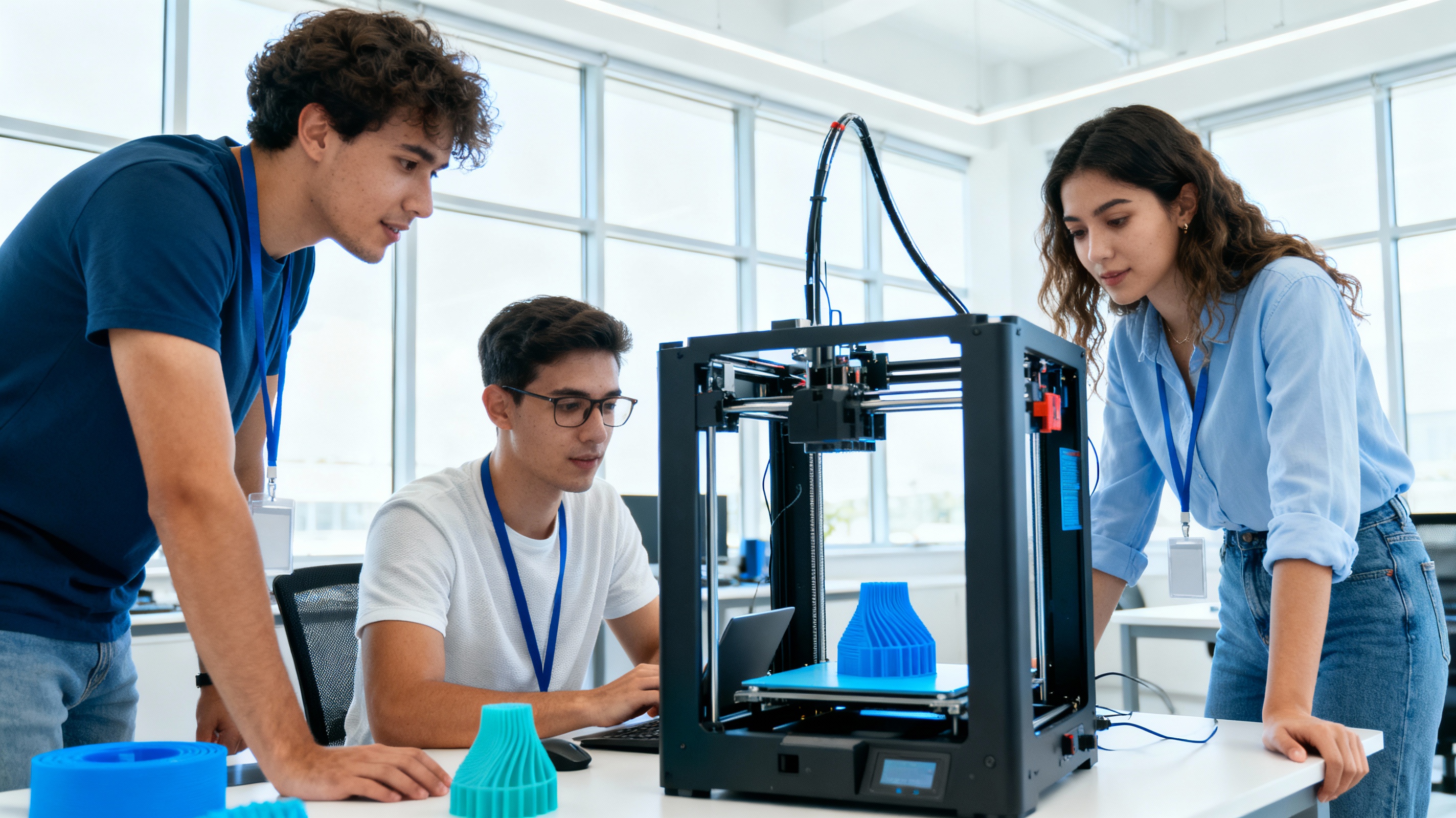
The 3DAcademy project, a cooperation of 10 organisations from 5 European countries, aims to improve the capacity of vocational education and training (VET) to deliver training in 3D technologies. Through a comprehensive work programme of five work packages, the project will develop and test a blended training programme and methodology that includes online learning modules and a platform with a train-the-trainer handbook. The programme will set out the steps needed to organise and deliver blended learning in 3D technologies for learners in vocational schools, in extracurricular VET activities and in adult education. The project is aligned with the digital transformation priority of the Erasmus+ programme and focuses on building the knowledge and capacity of VET providers to use 3D technologies for better teaching and training methods. It also addresses the priorities of the sector itself by offering guidance on adapting vocational education to labour market needs, and contributes to innovation by integrating 3D printing, scanning and modelling into existing technical courses and through entrepreneurship education.
The project will develop and offer03
- 01An online environment with structured, engaging and easy-to-use content for using and learning about 3D technologies for personal or professional purposes
- 02A training methodology and curriculum in 3D technologies tailored to the needs of VET teachers, trainers and educators, as well as vocational school students, first-year university students and early-career employees in industrial companies
- 03A new occupational standard in the field of 3D technologies
Target group04
- 01Small and medium-sized enterprises
- 02VET providers
- 03Vocational teachers and first-year university students
- 04Individuals across the partner countries, and others
The 3D Academy e-learning platform04
Callidus, as a partner in the 3D Academy project, invites you to discover the 3D Academy e-learning platform. Explore 3D technologies through interactive courses and unlock your potential in digital design.
How to start: visit the platform and register. It is quick, free and simple (Registration).
- 01Choose the course that suits you best, from basic to advanced level
- 02Dive into rich multimedia content on 3D printing, scanning and modelling
- 03Learn at your own pace and connect with other learners in the forums
- 04On successful completion, earn a certificate that confirms your knowledge
Do not miss the chance to improve your skills and use them in real projects and professional settings. Set sail into the world of 3D technologies today!

Partners09
- 01B2N Trade Ltd, Bulgaria
- 02Zemedelska profesionalna gimnazia, Bulgaria
- 033D Technologies Cluster (Klaster 3D tehnologija), Croatia
- 04Callidus – adult education institution, Croatia
- 05Strojarska i tehnička škola Fausta Vrančića, Croatia
- 06Voxellab d.o.o., Serbia
- 07Akademija tehničkih strukovnih studija Beograd, Serbia
- 08Association Digital Fabrication Laboratory, Bosnia and Herzegovina
- 09Future in Perspective Ltd., Ireland
Project 08 · 2020 – 2022Coordinator: Callidus
Hacking the Code for Women in STEAM
- PROJECT COORDINATOR
- Callidus – adult education institution, Croatia
- TOTAL VALUE
- EUR 227,130
- DURATION
- 1 September 2020 – 31 August 2022
- PROJECT WEBSITE
- steamywonders.eu
PROJECT GOAL
The aim of the project is to achieve greater gender equality in STEAM (science, technology, engineering, art, mathematics), a field which according to recent research is still dominated by men (72%), while the share of women has not changed significantly in recent years (28%). Gender bias is a growing problem, but tackling it through education at several levels would have a positive effect not only on the European economy but also on the awareness of the whole European population of the importance of gender equality. The project will pay special attention to women in upper secondary vocational education, as this is seen as the starting point for career orientation and development in STEAM and a potentially good basis for tackling prejudice and educating young people about the importance of gender equality.
Main activities and results05
- 01Developing a toolkit of 35 interactive infographics that address individuals' personal skills gaps and help them identify the right career choice in STEAM
- 02Developing a comprehensive professional development programme that supports the continuing professional development of vocational teachers and career guidance professionals
- 03Addressing key issues related to gender bias in STEAM by providing a range of resources that raise awareness of conscious and unconscious gender bias
- 04Supporting human resources managers in developing appropriate practices for recruiting, retaining and promoting women in the STEAM sector
- 05Developing a MOOC (Massive Open Online Course) that gives access to the Steamy Wonders interactive infographics, the professional development programme and the tools for human resources managers
Target group03
- 01Women of all ages interested in working in STEAM
- 02Adult educators
- 03Human resources professionals
Partners06
- 01Spectrum Research Centre CLG, Ireland
- 02Skills Elevation FHB, Germany
- 03SYNTHESIS CENTER FOR RESEARCH AND EDUCATION LIMITED, Cyprus
- 04BFI Burgenland, Austria
- 05JAITEK TECNOLOGÍA Y FORMACIÓN S.L., Spain
- 06ALIANCE LEKTORŮ a KONZULTANTŮ, Czech Republic
Project 09 · 2023 – 2025
BEST – Building environmental awareness and sustainability values through the Head, Heart, Hands Model for Transformative Learning

- PROJECT COORDINATOR
- Meath Partnership, Ireland
- TOTAL VALUE
- EUR 250,000
- DURATION
- 1 January 2023 – 1 January 2025
- PROJECT WEBSITE
- besterasmusproject.eu/results
PROJECT GOAL
This project aims to respond to the challenges faced by young people and youth workers across Europe by developing a package of resources with which they can strengthen their competences and become more active in defending their rights and needs, taking into account the direct and indirect impact of climate change on citizens' lives. The project will support citizens across Europe and encourage young people and youth workers to be ready to act on climate change and injustice at local, national and international level.
The project will strengthen the knowledge and awareness of young people so that they are ready to take part in the development and progress of their local, national and global community. Young people and youth workers will be involved in activities that directly affect their daily lives, by examining their conceptions and preconceived ideas about climate change and the impact it has on their everyday life.
Main activities and results09
Supporting young people in gaining a deeper understanding of the complexity of the challenges they face globally is imperative for building a better, more sustainable and more connected world. The project will focus on achieving the environmental sustainable development goals and will enable a deeper understanding of the global social problems we face in the fight against climate change.
The project will work towards six main objectives:
- 01Encourage young people to develop awareness of the causes and consequences of climate change
- 02Give young people and teachers a range of tools, ideas and initiatives they can use in the fight against climate change
- 03Empower young people to become agents of change and active citizens in their local communities
- 04Encourage young people and youth workers to create solutions to the challenges of climate change
- 05Educate young people and teachers about the role of cognitive, socio-emotional and behavioural competences, so that they can react in time and bring sustainable practices into their everyday lives
- 06Open informative and welcoming spaces for dialogue and communication about climate change
Main results:
- 01Mapping the ecosystem of challenges young people face when taking climate action
- 02Transformative climate change education: a professional development programme supporting youth workers
- 03A bank of sustainable ideas for fighting climate change
Target group03
- 01Young people aged 15 to 29
- 02Youth workers
- 03Other stakeholders interested in climate change
Partners05
- 01Callidus – adult education institution, Croatia
- 02Rightchallenge – Associação, Portugal
- 03JUGEND AM WERK STEIERMARK GMBH, Austria
- 04QUALITY CULTURE SRLS, Italy
- 05CSI CENTER FOR SOCIAL INNOVATION LTD, Cyprus
Newsletters and materials05
Project 10 · 2022 – 2024
DIVERSITe – Providing access points to work-based online learning environments for diversity management in multi-ethnic, age-diverse workforces
- PROJECT COORDINATOR
- BFI Burgenland, Austria
- TOTAL VALUE
- EUR 250,000
- DURATION
- 1 September 2022 – 31 August 2024
- PROJECT WEBSITE
- diversiteproject.eu
PROJECT GOAL
Diversity in the workplace is today one of the main features of working life across Europe. To get the most out of it, managers and workers face challenges that call for new interactive learning resources, which ask managers and workers to re-examine traditional or long-standing systems, structures, practices and beliefs. The DIVERSITe project addresses these issues through a collection of interactive infographics and e-Zines that help companies and employees integrate diversity management strategies into their workplaces.
Main activities and results10
- 01Promoting and supporting companies and employees in integrating diversity management strategies into their workplaces
- 02Providing accessible and agile learning programmes for business owners, managers and staff
- 03Supporting the digital readiness of vocational education and training, with lifelong learning for VET professionals and a package of digital learning materials for business owners, managers and employees
- 04Investing in diversity management skills and competences in European companies, to support the recovery of the European economy in a more inclusive way
- 05Creating local synergies between VET providers and members of the business community
- 06Supporting adult education teachers by involving them in transnational training activities
To respond to the market need for better VET provision that meets the emerging needs of increasingly diverse workplaces, and to help European companies become promoters of diversity, our main project objectives are:
- 01Support employers in bringing diversity into their business and in developing a diversity management strategy
- 02Educate employees about diversity and give them a package of learning resources that helps them promote diversity in their workplaces
- 03Involve adult education professionals in upskilling, so that they can use the learning materials developed in the project and gain confidence in working and teaching online
- 04Contribute to bringing diversity into workplaces in Europe
Target group02
- 01Adult educators
- 02Representatives of the business community
Partners07
- 01Callidus – adult education institution
- 02Future in Perspective Limited
- 03ITG Conseil
- 04Mindshift Talent Advisory lda
- 05NEOPHYTOS CH CHARALAMBOUS (INSTITUTE OF DEVELOPMENT LTD)
- 06IHK-PROJEKTGESELLSCHAFT MBH
- 07AKMI ANONIMI EKPAIDEFTIKI ETAIRIA
Project 11 · 2021 – 2023
SIS-SME – Building strategic innovation skills within SMEs
- PROJECT COORDINATOR
- Coopérative pour le Développement de la Créativité et de l’Innovation (France)
- TOTAL VALUE
- EUR 263,158
- DURATION
- 1 April 2021 – 31 March 2023 (24 months)
- PROJECT WEBSITE
- sissme.eu
PROJECT GOAL
The main theme of the project is the development of a learning programme on strategic innovation that helps business owners and managers recover progressively from the impact of the Covid-19 pandemic. All materials developed in the project are designed to support mobile learning on smartphones. In this way the project addresses the low take-up of education and training in the SME sector. The project will focus on building the strategic innovation skills of small and medium-sized enterprises, so that they are informed and prepared to seize new opportunities in today's digital world. The project will also provide basic training for vocational teachers, to improve their knowledge of strategic innovation in the SME sector and to build the pedagogical and digital skills that help them make use of online learning.
Main activities and results03
- 01In-company, work-based training aimed at increasing innovation after the negative impact of the Covid-19 pandemic
- 02A collection of interactive infographics and EduZines. The partners identified the strategic innovation modules covered in the EduZine package; business owners and managers will be introduced to 7 strategic innovation modules: innovation typologies, business culture, innovation drivers, ethics and governance, corporate innovation strategies, action, and solutions for business strategy
- 03The SIS-SME MOOC and Community of Practice. The partners will develop a MOOC platform presenting all materials developed during the project, contributing to the development of strategic innovation in companies. The MOOC will also support the exchange of best practice among peers, to ensure successful strategic innovation in business
Target group02
- 01Vocational teachers
- 02Entrepreneurs and managers
Partners07
- 01Callidus – adult education institution
- 02INNOVADE LI LTD (Cyprus)
- 03Spectrum Research Centre CLG (Ireland)
- 04Rightchallenge – Associação (Portugal)
- 05Skills Elevation FHB (Germany)
- 06Academia Postal 3 Vigo S.L. (Spain)
- 07BULGARIAN-ROMANIAN CHAMBER OF COMMERCE AND INDUSTRY ASSOCIATION (Bulgaria)
Project 12 · 2022 – 2024
Circulo

- PROJECT COORDINATOR
- Gestión Estratégica e Innovación SL, Spain
- TOTAL VALUE
- EUR 200,390
- DURATION
- 1 April 2022 – 31 March 2024
- PROJECT WEBSITE
- circuloproject.eu/about
PROJECT GOAL
To develop and introduce a hybrid learning approach that builds the entrepreneurial, digital and green skills of vocational teachers and learners, and to develop and test a new pedagogical approach in vocational education and training that puts digitalisation at the centre of the learning process. CIRCULO will develop a train-the-trainer programme addressing several priorities of the European Green Deal and the European Skills Agenda, with an emphasis on broadening vocational teachers' knowledge of entrepreneurship and of the key principles of the circular economy. An accessible, interactive online platform will be used to build the pedagogical and digital skills of vocational teachers, so that they can provide high-quality vocational education and training. This will also raise their confidence in distance teaching and develop the teaching and mentoring skills they need to help young people and VET learners reach their potential.
Main activities and results03
- 01Create a new train-the-trainer continuing professional development programme for vocational teachers and trainers, strengthening their digital skills so that they can digitalise their teaching methods and techniques and give their learners appropriate guidance and mentoring
- 02Develop the CIRCULO teaching toolkits that enable VET learners to gain the skills needed for the green and circular economy
- 03Develop the CIRCULO e-learning platform, giving access to all materials developed in the project and to an online community of VET professionals from across Europe
Target group02
- 01Vocational teachers
- 02VET learners
Partners07
- 01Callidus – adult education institution, Croatia
- 02Spectrum Research Centre CLG, Ireland
- 03Skills Elevation FHB, Germany
- 04Mindshift Talent Advisory lda, Portugal
- 05The Square Dot team, Belgium
- 06INNOVADE LI LTD, Cyprus
- 07COMITE DE BASSIN D’EMPLOI DU SUD LUBERON, France
Newsletters and materials03
Project 13 · 2021 – 2023
eSMART – Next Generation Web 4.0 Entrepreneurs
- PROJECT COORDINATOR
- BFI Burgenland, Austria
- TOTAL VALUE
- EUR 267,126
- DURATION
- 1 April 2021 – 31 March 2023
- PROJECT WEBSITE
- esmart-project.eu
PROJECT GOAL
The aim of the project is to support the uptake of innovative approaches and digital technologies for teaching and learning. The eSMART project will produce an entrepreneurship curriculum for young digital natives starting a career in the CCI sector. The project will also provide basic professional development for vocational teachers, to make sure they are familiar with all the online opportunities and potential for starting new businesses. In this way vocational teachers will also build the pedagogical and digital skills that help them use the potential of online networks for learning and for delivering high-quality vocational education in the current context of the Covid-19 pandemic, in which traditional services based solely on institutional education are no longer sustainable.
Main activities and results03
- 01Design and produce a targeted entrepreneurship curriculum for young digital natives starting a career in the CCI sector
- 02Develop a comprehensive package of digital learning material that gives young entrepreneurs the necessary and useful information about starting their own business
- 03Provide basic professional development for vocational teachers, to make sure they are familiar with all the online opportunities and potential for starting new businesses
Target group02
- 01Vocational teachers
- 02Young people with well-developed digital skills
CCI sector: the cultural and creative sector. More information on this topic is available on the European Commission website.
Partners07
- 01Callidus – adult education institution, Croatia
- 02Spectrum Research Centre CLG, Ireland
- 03Skills Elevation FHB, Germany
- 04Academia Postal 3 Vigo S.L, Spain
- 05WYZSZA SZKOLA BIZNESU I NAUK O ZDROWIU, Poland
- 06CENTRE FOR ADVANCEMENT OF RESEARCH AND DEVELOPMENT IN EDUCATIONAL TECHNOLOGY LTD – CARDET, Cyprus
- 07Rightchallenge – Associação, Portugal
Newsletters and materials05
Project 14 · 24 months
The VET-ification of Online Gaming through innovative challenge-based learning
- PROJECT COORDINATOR
- Association de Gestion des Fonds Européens
- TOTAL VALUE
- EUR 255,567
- DURATION
- 24 months
- PROJECT WEBSITE
- casino-project.eu
PROJECT GOAL
The aim of the project is to design and develop mobile games that engage people who have dropped out of education and are reluctant learners. By creating engaging learning resources we will further engage and motivate young people, raise their self-esteem and self-awareness and build their confidence. In this way the project aims to bring young people who have dropped out of education back onto the path of lifelong learning.
Main activities and results04
- 01Building partnerships with local stakeholder groups and presenting the new learning methodology and new engaging learning resources
- 02Basic professional training for vocational teachers and educators, to improve their technical skills for creating new and innovative learning resources using the latest technology
- 03Pop-up Gaming Hubs through which the project is presented to the target group
- 04A final conference presenting the new learning resources, the new methodology and the results of the pilot phase
Target group
NEETs (young people aged 19 to 34 who have not completed any education, are not currently in education or training and are not employed)
Partners07
- 01Callidus – adult education institution
- 02Hauptstadtallee 239 V V UG (Skills Elevation FHB)
- 03FUTURE IN PERSPECTIVE LIMITED
- 04INSTITUTO PARA EL FOMENTO DEL DESARROLLO Y LA FORMACION SL
- 05CENTRE FOR ADVANCEMENT OF RESEARCH AND DEVELOPMENT IN EDUCATIONAL TECHNOLOGY LTD – CARDET
- 06Rightchallenge – Associação
- 07VsI Socialiniu inovaciju centras
Project 15 · 24 months
AGILITe – Developing the digital and entrepreneurial competences of VET trainers to support agile entrepreneurship training
- PROJECT COORDINATOR
- FUTURE IN PERSPECTIVE LIMITED
- TOTAL VALUE
- EUR 299,365
- DURATION
- 24 months
- PROJECT WEBSITE
- agilite-project.eu
PROJECT GOAL
The aim of the project is to build digital competences, an entrepreneurial mindset and an understanding of the European Green Deal among vocational teachers. The project also aims to promote new business opportunities to vocational teachers, helping them develop innovative and attractive learning frameworks and make good use of the potential of emerging entrepreneurs by taking part in developing their key competences.
Main activities and results04
- 01Improving the competences of vocational teachers and educators through professional development
- 02Involving vocational teachers in a Community of Practice
- 03Building entrepreneurial competences and key knowledge about the circular economy through the AGILITe EduZines
- 04A final conference presenting the whole package of resources, attended by vocational teachers and educators
Target group02
- 01Vocational teachers
- 02Adult educators
* EduZines: a learning resource and innovative method for self-directed learning that offers high-quality, easily accessible learning opportunities and materials for vocational teachers and adult educators.
* Community of Practice: a community of vocational teachers gathered around an online platform (MOOC) that holds and distributes all the materials developed in the project, keeping them available after the project ends.
Partners08
- 01Callidus – adult education institution
- 02Academia Postal 3 Vigo S.L.
- 03AKMI ANONIMI EKPAIDEFTIKI ETAIRIA
- 04A & A Emphasys Interactive Solutions Ltd
- 05Hauptstadtallee 239 V V UG (Skills Elevation FHB)
- 06FONIX AS
- 07INSTITUTO DE SOLDADURA E QUALIDADE
- 08FUNDATIA PROFESSIONAL
Project 16 · 2020 – 2023
Green-4-Future

- PROJECT COORDINATOR
- Universitaet Paderborn, Germany
- TOTAL VALUE
- EUR 419,013
- DURATION
- 1 September 2020 – 31 August 2023
- PROJECT WEBSITE
- green4future.eu
PROJECT GOAL
To respond successfully to increasingly pronounced climate change, the aim of this project is to change the global environment through maximum social impact, without losing the business vision of creating profitable products. The aim of the “Green for Future” project is to create a new “green” concept that leads to key changes in the awareness of companies and in adult education. The project wants to lead consumers, employees and other stakeholders to change how they see the environmental situation in their countries, and is an important attempt to develop innovative qualification frameworks and resources that encourage change in the business sector.
Main activities and results05
- 0172 adult educators will complete in-service training introducing the new “green” concept
- 02Development of a green EntreComp qualification framework, to embed the essential values of sustainable entrepreneurship and promote the new concept of the “green” economy
- 03Development of a collection of resources for acquiring business competences, to support adult education staff
- 04Development of an in-service training programme supporting the continuing professional development of adult educators in understanding the concept of “green” entrepreneurship
- 05Development of a massive open online course to promote the concept of “green” entrepreneurship
Target group02
- 01Adult educators
- 02Employees, companies, economic decision-makers and other stakeholders
Green EntreComp: a qualification framework to be used by adult educators in schools and universities across Europe. Providing GreenEntreComp as a framework for future development will have a significant impact on the environment and on companies throughout Europe.
Partners08
- 01Callidus – adult education institution, Croatia
- 02Berufsförderungsinstitut Burgenland, Austria
- 03Spectrum Research Centre CLG, Ireland
- 04Universitatea Din Pitesti, Romania
- 05University of Peloponnese, Greece
- 06Centre for advancement of research and development in educational technology Ltd. CARDET, Cyprus
- 07Instituto de Soldadura e Qualidade, Portugal
- 08Burgarski Svoboden Universitet, Bulgaria
Project 17 · 2020 – 2022
SKILL PICS – Using Interactive Infographics to Promote Problem Based Learning for the Development of Key Transversal Skills
- PROJECT COORDINATOR
- Berufsförderungsinstitut Burgenland, Austria
- TOTAL VALUE
- EUR 246,319
- DURATION
- 1 September 2020 – 31 August 2022
- PROJECT WEBSITE
- skillpics.eu
PROJECT GOAL
The aim of the project is to give all citizens key transversal skills such as digital literacy, entrepreneurship, critical and creative thinking, leadership, innovation, problem solving, teamwork and social impact. These skills are not meant for one particular field of work but for use across a wide range of areas, which increases citizens' value on the labour market.
Main activities and results06
- 01Promoting a new methodology that uses problem-based learning instead of the usual blended learning method
- 02400 adult learners will develop key transversal skills that help them on the labour market
- 0348 adult educators will complete the pilot of the in-service training programme, which will increase their digital and pedagogical skills
- 0416 interactive infographics will be developed and translated into the 8 partner languages
- 05An in-service handbook will be developed and translated into the 8 partner languages
- 06Development of the project MOOC (massive open online course)
Target group02
- 01Adult educators who want to respond to the market need for transversal skills in modern business
- 02People who want to gain the key transversal competences they need to reach their potential and achieve their career goals
Interactive infographics: a type of online task that gives the target group a great opportunity to gain knowledge through different challenges. They include explainer videos, magazine articles, quizzes or puzzles, digital breakouts or online escape rooms, and WebQuests.
Partners07
- 01Callidus – adult education institution, Croatia
- 02Future in Perspective Limited, Ireland
- 03Aliance Lektoru a Konzultantu, Czech Republic
- 04Jaitek Tecnología y Formación SL, Spain
- 05Innovade Li Ltd., Cyprus
- 06Rightchallenge – Associação, Portugal
- 07Hauptstadtallee 239 V V UG, Germany
Project 18 · 2020 – 2022
Entrepreneurship Training for Innovators
- PROJECT COORDINATOR
- Coopérative pour le Développement de la Créativité et de l’Innovation (France)
- TOTAL VALUE
- EUR 252,382
- DURATION
- 15 September 2020 – 14 September 2022
- PROJECT WEBSITE
- 8percent.eu
PROJECT GOAL
The aim of the project is to involve entrepreneurs in the development of innovation processes that until now have been reserved almost exclusively for scientists and the academic community. The idea of the project is to bring a large number of people into innovation processes, enable knowledge to circulate more freely and develop products and services that can help create new markets.
The main participants in the project are highly educated innovative entrepreneurs with substantial work experience (5 to 10 years). The results of this project are expected to have a lasting impact on European society.
Main activities and results09
Developing a collection of interactive infographics that provide training in innovation entrepreneurship. The interactive infographics in the collection address the following key competence areas:
- 01Creative thinking
- 02Problem solving
- 03Leadership and team management
- 04Innovation management
- 05Strategic planning
- 06Risk management
- 07Business model development
- 08Raising venture capital
- 09Rapid experimentation
Developing a professional development programme for adult educators, with the specific aim of building their skills and competences to create their own interactive infographic resources.
Developing a free online learning platform that gives access to the collection of interactive infographics.
Target group02
- 01Innovative entrepreneurs
- 02Adult educators
Partners07
- 01Callidus – adult education institution (Croatia)
- 02Mindshift Talent Advisory lda (Portugal)
- 03INNOVADE LI LTD (Cyprus)
- 04FUTURE IN PERSPECTIVE LIMITED – FIPL (Ireland)
- 05JAITEK TECNOLOGÍA Y FORMACIÓN SL (Spain)
- 06Skills Elevation FHB (Germany)
- 07QUARTER MEDIATION (Netherlands)
Project 19 · 2020 – 2022
NEET-IDEA – Supporting Digital Native NEETs Back to Mainstream Education, Training and Employment
- PROJECT COORDINATOR
- VSI INOVACIJU BIURAS, Lithuania
- TOTAL VALUE
- EUR 171,721
- DURATION
- 1 October 2020 – 30 July 2022
PROJECT GOAL
The aim of the project is to engage and motivate marginalised young adults aged 20 to 34 (NEETs*) to return to education, training programmes and employment. Despite lower educational attainment, most of today's NEET population has a basic level of knowledge of digital and social media. This kind of digital literacy can be a turning point for re-engaging NEETs in education. The NEET-IDEA project will give young people the chance to learn how to use their smartphones to shoot short films and to be part of a film crew in a role that suits their personal preferences.
Main activities and results07
- 01Developing a professional development programme that makes sure adult educators gain the skills needed to train NEETs in producing digital content with smartphones
- 02Developing the curriculum for the professional development programme for teachers
- 03A new developmental approach to acquiring key basic and transversal skills, set in a digital and media production environment
- 04Developing an online platform that gives access to the professional development resources
- 0570 adult educators will complete the professional development programme for re-engaging marginalised young adults in education
- 06350 NEETs will be part of a film crew and complete the training programme in producing digital and social media content
- 07Production of 70 short films on the theme “My dream job”
Target group02
- 01NEETs
- 02Educators working with marginalised young people
* NEET is an acronym for young people aged 20 to 34 (in Croatia 15 to 29) who are Not in Employment, Education or Training.
Partners06
- 01Callidus – adult education institution, Croatia
- 02VSI INOVACIJU BIURAS, Lithuania
- 03DRUZHESTVO ZNANIE, Bulgaria
- 04OSRODEK SZKOLENIOWO-BADAWCZY INNEO, Poland
- 05AKLUB CENTRUM VZDELAVANI A PORADENSTVI, Czech Republic
- 06ARPIS Asociacion Regional Para la Inclusion Social, Spain
Project 20 · 2019 – 2021Coordinator: Callidus
ELEVATION – Raising the skills of adults on the margins of lifelong learning

- PROJECT COORDINATOR
- Callidus – adult education institution, Croatia
- TOTAL VALUE
- EUR 163,506
- DURATION
- 2 September 2019 – 1 September 2021
- PROJECT WEBSITE
- elevationproject.eu/hr
PROJECT GOAL
The aim of the project is to develop mini learning resources for acquiring key competences, intended for adults with fewer opportunities who show no interest in taking part in lifelong learning. To support this aim, the project develops a curriculum for training adult education staff to work with this target group of adult learners and to use the new learning resources more easily and effectively.
Main activities and results05
- 01IO1 – Development of mini learning resources for acquiring key competences in the disciplines: art, culture, digital and social media, sport and hobbies
- 02IO2 – A curriculum for training adult education staff to work with the target group
- 03IO3 – Development and design of a modular learner handbook with the content needed for learning under the new learning frameworks, and a handbook for organising learning festivals
- 04IO4 – An e-learning portal
- 05IO5 – Project evaluation
Target group02
- 01Low-qualified adults, migrants, refugees, ethnic minorities and others
- 02Educators
The project seeks to develop and adapt new learning materials in order to draw the most vulnerable back into education. The new materials will cover popular topics such as art, culture, digital and social media, sport and various hobbies.
The idea of the project is to adapt these themes to essential educational disciplines so that they are simple and accessible to the marginalised target group, who can then become interested and involved in solving such challenges. The aim is not only to broaden participants' knowledge and general culture on today's popular topics, but through these everyday themes to raise their competences in other essential educational disciplines as well, even though at first they may not be aware of the new competences they have gained, which can help them greatly in education and work in the long term.
Partners06
- 01Osrodek Szkoleniowo-Badawczy INNEO, Poland
- 02Asociatia pentru Educatie si Dezvoltare Durabila, Romania
- 03Centre for advancement of research and development in educational technology, CARDET, Cyprus
- 04The Rural Hub, Ireland
- 05Rightchallenge – Associação, Portugal
- 06The Swiss Federation for Adult Learning – SVEB, Switzerland
Project 21 · 2019 – 2021
PIGGY BANK – A Family Learning Model to Promote Financial Literacy
- PROJECT COORDINATOR
- Reintegra, Czech Republic
- TOTAL VALUE
- EUR 226,084
- DURATION
- 1 September 2019 – 30 September 2021
- PROJECT WEBSITE
- piggybankproject.eu
PROJECT GOAL
The aim of this project is to raise the level of financial literacy in all partner countries, with an emphasis on helping families who need this knowledge. The project was created to improve people's financial literacy so that in future as few families as possible find themselves in difficult financial situations that directly endanger their livelihood.
Main activities and results07
- 01Developing a mobile application that participants can use for learning
- 02Producing a collection of 12 comic strips for younger children, translated into the 6 partner languages
- 03Developing 12 learning resources in the form of Escape Room challenges for online learning, for children aged 13 to 18
- 04Developing 12 learning resources in the form of WebQuest tasks for young people aged 19 to 25, for learning about financial management; half of them have a positive and half a negative scenario of financial behaviour, so that participants learn from both good and bad experiences of managing money
- 05Developing a learning programme for parents and guardians, to build their own financial literacy and enable them to manage the new family learning model
- 06Developing a training programme and handbook that address the specific challenges of using the new learning resources and support the continuing professional development of educators, to make the most of the new resources
- 07Developing an online learning platform: a tailored, fully mobile shared online learning environment that supports access from smartphones and tablets
Target group05
- 01Children aged 6 to 12
- 02Teenagers aged 13 to 18
- 03Young people aged 19 to 25
- 04Parents and guardians
- 05Educators
The target group is not only adults with a lower level of financial literacy but also children of various ages, so that they are as well prepared as possible for the financial challenges and pitfalls they will meet while growing up and throughout life.
WebQuests and Escape Room Challenges are ways of solving tasks and challenges online in order to gain new knowledge and competences.
Partners06
- 01Callidus – adult education institution, Croatia
- 02Future in Perspective Limited, Ireland
- 03Centre for Advancement of research and development in educational technology, CARDET, Cyprus
- 04AEVA – Associacao para a educacao e valorizacao da regiao de aveiro, Portugal
- 05Asociación cultural y medioambiental Permacultura Cantabria, Spain
- 06The Swiss Federation for Adult Learning – SVEB, Switzerland
Project 22 · 2019 – 2022
Zero Waste power in HoReCa
- PROJECT COORDINATOR
- Centar za odgoj i obrazovanje „Slava Raškaj“ Zagreb, Croatia
- TOTAL VALUE
- EUR 208,858
- DURATION
- 1 September 2019 – 28 February 2022
- PROJECT WEBSITE
- zerowastepower.eu/p-1.html
PROJECT GOAL
Through a series of activities, this project links Zero Waste themes with vocational education and the hospitality business sector, with the clear goal of changing education and business processes by choosing working models that are sustainable and less harmful to the environment.
Main activities and results06
- 01Producing a curriculum for implementing specific waste management procedures in the HoReCa sector
- 02The curriculum will contain learning content and concrete guidelines on organising work in hospitality establishments with the aim of protecting the environment, based on establishing a Zero Waste standard
- 03Designing digital learning tools based on the curriculum
- 04The aim is to support learning through individual ways of acquiring knowledge and the use of ICT tools
- 05The tool is intended for all students in vocational hospitality education and for staff in the HoReCa sector
- 06Producing a standard IT tool for evaluating the level of Zero Waste operation
Target group02
- 01Students and teachers of VET hospitality schools: the tools will give participants the basics for organising professional kitchens and hospitality establishments, with the main aim of reducing waste, protecting the environment and raising the Zero Waste standard in the HoReCa sector
- 02Hotels and hospitality establishments: a digital tool for assessing zero-waste standards will be developed for hotel managers and executives
Zero Waste is a global movement focused on finding the best solutions to current issues of environmental pollution and the reuse of used materials.
Partners06
- 01Callidus – adult education institution, Croatia
- 02it, Italy
- 03Turistička i ugostiteljska škola Dubrovnik, Croatia
- 04Cámara Oficial de Comercio, Industria y Navegación de Granada, Spain
- 05Srednja šola za gostinstvo in turizem, Slovenia
- 06Future In Perspective Limited, Ireland
Project 23 · 2018 – 2021
Game of Phones

- PROJECT COORDINATOR
- Meath Partnership, Ireland
- TOTAL VALUE
- EUR 174,404
- DURATION
- 1 November 2018 – 31 January 2021
- PROJECT WEBSITE
- gameofphonesproject.eu/en
PROJECT GOAL
Game of Phones is an Erasmus+ project whose primary aim is to help reintegrate a marginalised target group into education or employment by designing and developing challenge-based tasks for young people, so that by solving these challenges they gain skills and competences that improve their employment prospects or motivate them to continue their education.
Main activities and results08
- 01Developing learning content for the WebQuest challenges
- 02Producing 32 WebQuest challenges in a media format suitable for learning on mobile platforms and smartphones
- 03Gaining deeper knowledge and understanding of the origins and functioning of the EU
- 04Exploring the historically connected diversity and cultural identities of Europe
- 05Promoting the multicultural and socio-economic values of European society
- 06Demonstrating national cultural identity and its compatibility with European identity
- 07Developing a Mozilla Badges reward system to motivate the target group to gain new knowledge and skills
- 08Identifying the key stakeholders who will be members of the local stakeholder forum
Some of the key skills the training aims to build are critical thinking, problem solving, research, digital skills, communication and teamwork.
Target group02
- 01Educators working with marginalised young people
- 02NEETs
* WebQuest: a form of online task that offers the target group great opportunities to gain knowledge through various challenges.
* Mozilla Badges: a way of recognising learners' achievements by awarding badges.
* NEET is an acronym for young people aged 18 to 24 (in Croatia 15 to 29) who are Not in Employment, Education or Training.
Partners05
- 01Callidus – adult education institution, Croatia
- 02Fondo Formacion Euskadi, FFE, Spain
- 03Storytellme, Portugal
- 04Centre for Advancement of research and development in educational technology, CARDET, Cyprus
- 05The Swiss Federation for Adult Learning – SVEB, Switzerland
Project 24 · 2017 – 2019
DIME – Digital Media: A Bridge to Inclusion

- PROJECT COORDINATOR
- Ballybeen Women’s Centre – BWC, Northern Ireland
- TOTAL VALUE
- EUR 296,324
- DURATION
- 1 October 2017 – 30 September 2019
- PROJECT WEBSITE
- dimeproject.eu
PROJECT GOAL
Given that digital media are an excellent way of transferring knowledge and developing key competences, the aim of this project was to offer marginalised young adults (NEETs) an effective way of gaining the knowledge, skills and competences that make them more competitive on the modern labour market.
Main activities and results05
- 01Training educators of young adults in digital and pedagogical skills, so that they can go on to train the marginalised target group of the project
- 02Training delivered in each partner country, with educators passing on what they had learned to unemployed young adults
- 03An innovative guide was produced, which educators used to pass on the knowledge gained through the DIME training to marginalised young adults effectively
- 04Young adults had a workbook that helped them get to know all the skills, techniques and rules involved in digital media production
- 05A Short Film Festival and a National Campaign were held in each partner country; they helped greatly in raising awareness of the need for this kind of knowledge and skills among marginalised groups, and of the benefits of digital media knowledge in general
Target group02
- 01NEETs
- 02Educators of young adults
Project result
As one of the project partners, Callidus directed the knowledge gained through the training of its staff towards developing the knowledge and skills of young adults, in order to improve their opportunities on the labour market. As one of the intellectual outputs of this project we also present a short video with quick tips for making your own short film on your smartphone. We hope you enjoy it and learn something new along the way.
Partners08
- 01Callidus – adult education institution, Croatia
- 02Kas Halk Egitimi Merkezi – Kas HEM, Türkiye
- 03The Rural Hub, Ireland
- 04Cooperativa Sociale Prometeo onlus a Mutualita Prevalente – Prometeo, Italy
- 05Osrodek Szkoleniowo-Badawczy INNEO, Poland
- 06INNOVENTUM OY, Finland
- 07Reintegra, Czech Republic
- 08The Swiss Federation for Adult Learning – SVEB, Switzerland
Project 25 · 2014 – 2016
Youthcoach – “My Chance for the Future”

- PROJECT COORDINATOR
- Aklub Centrum Vzdelavani A Poradenstvi – AKLUB, Czech Republic
- TOTAL VALUE
- EUR 276,810
- DURATION
- 1 September 2014 – 31 August 2016
PROJECT GOAL
The Youthcoach project is an international European VET (vocational education and training) partnership that aims to transfer, adapt and implement innovative projects and products which:
- 01Strengthen the link and cooperation between education and employment in initial vocational education and training
- 02Help reduce the high number of drop-outs in vocational education and training
- 03Develop basic and supporting skills, especially entrepreneurial skills, with young VET learners
- 04Validate the skills and abilities of these young learners in line with the Europe 2020, ET 2020 and Erasmus+ objectives
- 05Promote the exchange of experience, further adaptation of concepts and international networking, integrating the local stakeholders of each project partner
Main activities and results09
- 01A needs analysis of each market in the partner countries
- 02Training of trainers in youth coaching
- 03A shared Toolbox to support the guidance of young people
- 04A transnational workshop for trainers from all countries
- 05Transfer of the concepts of assistance in vocational training (DE), the Toolbox (CZ), Jugendcoaching (AT) and EBC*L Enterprise (SI) to other European countries
- 06Development of the Youthcoach competence profile and the Youthcoach train-the-trainer course, based on research in all partner countries
- 07Delivery of train-the-trainer courses with 70 trainers in the partner countries
- 08Development of Toolboxes for youth trainers, including modules on: working with companies to bridge the gap between vocational education and the labour market, intercultural competences, personal development, and promoting entrepreneurship-related competences (EBC*L)
- 09A Youthcoach website with all the products
Target group04
- 01VET organisations
- 02Vocational teachers
- 03Trainers of young VET learners
- 04Young VET learners
Partners07
- 01WIFI Croatia, Croatia
- 02BFI, Austria
- 03INAB, Germany
- 04IFOA, Italy
- 05IDT, Spain
- 06Techniki Ekpaideftiki, Greece
- 07Atama, Slovenia
Project 26 · 2016 – 2018
Skill IT

- PROJECT COORDINATOR
- Ballybeen Women’s Centre – BWC, Northern Ireland
- TOTAL VALUE
- EUR 260,500
- DURATION
- 1 October 2016 – 30 September 2018
PROJECT GOAL
The project is a strategic partnership that aims to develop, design and implement ways of improving basic skills, digital skills in particular, for specific groups of adults. Some of the main objectives of the project were:
- 01To raise the level of digital literacy among disadvantaged adults
- 02To strengthen cooperation between local and regional organisations in the partner countries that work with marginalised target groups
- 03To improve and widen access to learning opportunities in line with the Europe 2020, ET 2020 and Erasmus+ objectives
Target group05
- 01People with low or no qualifications
- 02People in elementary occupations
- 03Unemployed people
- 04Migrants
- 05Economically inactive people
Partners06
- 01Callidus – adult education institution, Croatia
- 02Kas Halk Egitimi Merkezi – Kas HEM, Türkiye
- 03Instituto De Formacion Y Estudios Sociales – IFES, Spain
- 04Aklub Centrum Vzdelavani A Poradenstvi – AKLUB, Czech Republic
- 05Morfogennesis, Greece
- 06Cooperativa Sociale Prometeo onlus a Mutualita Prevalente – Prometeo, Italy
Other projects
See projects from other programmes
Terms and Conditions
Privacy Policy